



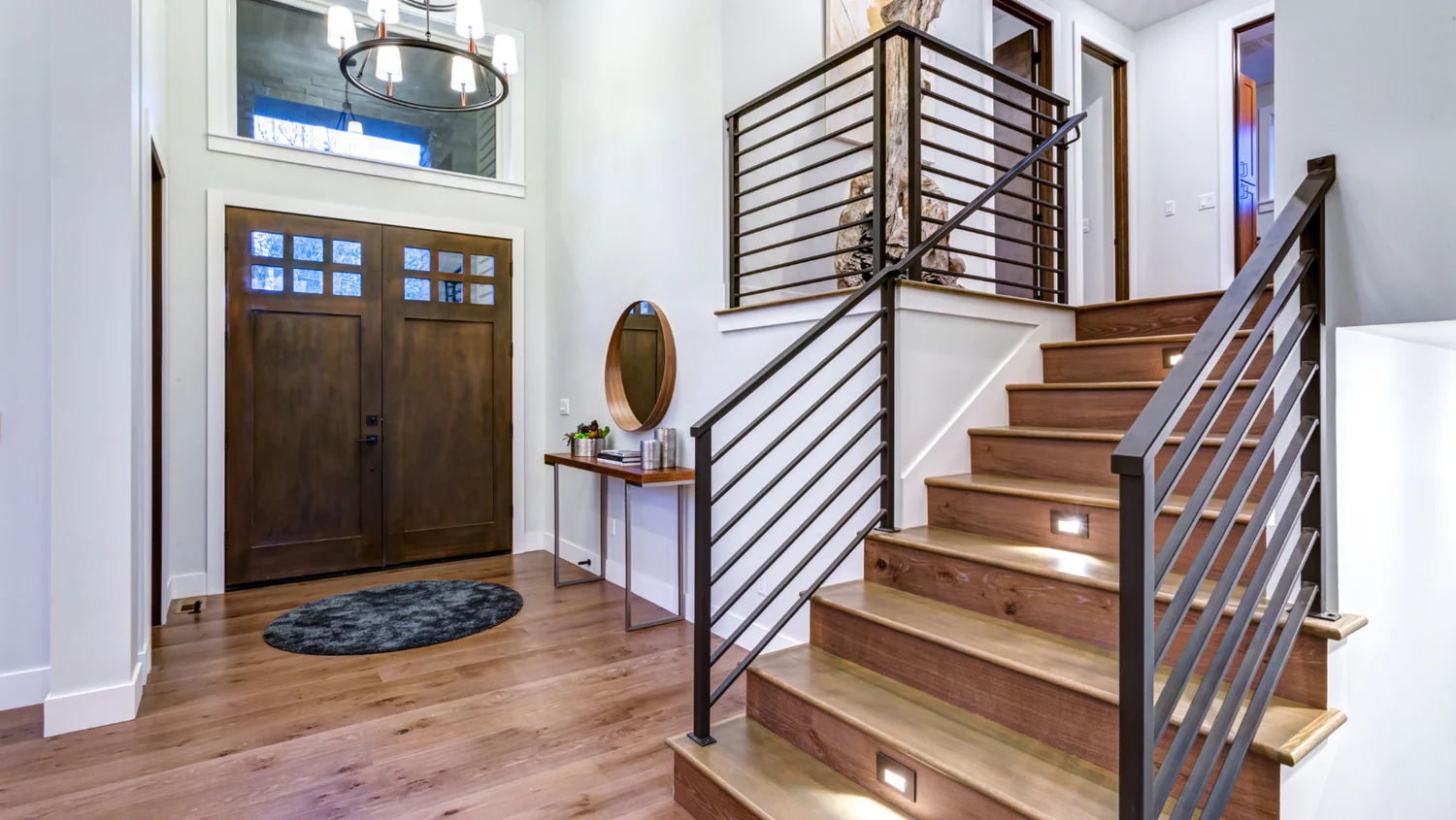
The retrofit stair tread category has matured significantly over the past decade — moving from a niche workaround for budget-constrained projects into a specification-grade product that premium flooring dealers, remodeling contractors, and custom homebuilders are incorporating into their standard offering as a matter of competitive advantage rather than necessity. For trade professionals who have not yet developed a structured approach to specifying and selling retrofit stair treads, the category represents one of the more accessible revenue expansion opportunities available in the current residential renovation market — one that leverages existing client relationships, existing installer skill sets, and existing supplier relationships without requiring significant new infrastructure to capture.
The Market Condition Driving Retrofit Demand
The residential renovation cycle that has characterised the housing market across the past several years has created a specific and sustained demand condition that retrofit stair treads are exceptionally well positioned to address. Homeowners who purchased properties during periods of elevated transaction activity are investing in interior upgrades — hardwood flooring replacements, kitchen renovations, and the staircase updates that connect those improved spaces visually — without the appetite for the disruption and cost that full structural renovation involves.
The staircase sits at the intersection of this demand condition in a particularly direct way. It is the vertical connector between floors that hardwood flooring investments are made on — and a staircase left with dated carpet, painted wood, or a species that no longer matches the updated floors below reads as the most visible incompletion in an otherwise improved interior. The client who has just invested in new wide-plank white oak flooring throughout the main level almost invariably wants the staircase addressed — and the retrofit pathway that delivers that result without full tread replacement is the conversation that closes that project scope.
For flooring dealers and contractors positioned to offer that conversation confidently and completely, the retrofit stair tread category is a natural extension of the client relationship already in place.
Qualifying the Project: When Retrofit Is the Right Specification
Retrofit stair treads are not the appropriate specification for every stair renovation project — and trade professionals who understand the qualification criteria present the category with more credibility and close more of the right projects than those who default to it as a universal solution.
The primary qualification criterion is the structural condition of the existing treads. Retrofit treads are engineered to overlay an existing tread surface — which means that surface must be structurally sound, securely fastened, and flat enough to provide a consistent bonding substrate across the full depth and width of the tread. Existing treads with significant movement, structural damage, delamination, or severe surface irregularity require remediation or full replacement before a retrofit overlay is an appropriate specification.
The second qualification criterion is dimensional compatibility. The addition of a retrofit tread overlay increases the total riser height at the first step of the flight — the step where the overlay adds thickness above the finished floor level — and reduces it proportionally at the top step where no overlay is added. On staircases where existing riser heights are already at or near the maximum permitted by applicable building codes, this dimensional change may create a non-compliant condition that disqualifies the retrofit approach without structural modification. Measuring existing riser heights accurately and calculating the post-installation dimensions before specifying is the due diligence step that protects the contractor from a compliance problem discovered after installation.
The third criterion is nosing profile compatibility. Existing treads with pronounced nosing profiles — heavy bullnose, cove returns, or complex moulded profiles — may require nosing removal or modification before a retrofit overlay can be installed flush and secure. Understanding the nosing condition at the project qualification stage determines whether the installation scope is straightforward or requires additional preparation work that affects the project timeline and cost structure.
Product Specification: The Variables That Determine the Right Tread
Within the retrofit stair tread category, specification decisions around species, thickness, nosing profile, and finish determine both the visual outcome and the installation performance of the completed project.
Species selection should be driven by the flooring product already installed or being installed in the surrounding rooms. The visual integration of the staircase with the adjacent floor — the outcome that clients are investing in — depends on species consistency more than any other single variable. White oak, red oak, maple, hickory, and the range of domestic hardwood species available in prefinished flooring products should all be available in retrofit tread specifications from a trade-grade supplier.
Thickness selection affects both the installation process and the finished dimensional result. Standard retrofit tread thicknesses typically range from three-quarter inch to one inch nominal — with the appropriate selection determined by the depth of the existing nosing, the riser height calculation, and the finish floor transition requirement at the base of the staircase. Thicker tread profiles provide more material for surface refinishing if that option is desired in the future but require more precise nosing preparation to achieve a flush, secure bond across the full tread depth.
Nosing profile on the retrofit tread must be compatible with the riser face below it. A return nosing profile — where the nosing wraps around the front edge of the tread and returns to the riser face — produces the cleanest visual result and the most complete coverage of the joint between new tread and existing riser. Square nosing profiles are appropriate where the riser is being replaced simultaneously or where the existing riser face is in a condition and finish that complements the new tread without modification.
Prefinished retrofit treads eliminate the site-finishing requirement that adds scheduling complexity, ventilation demands, and cure time to any stair renovation project. Factory-applied finish systems on quality prefinished retrofit treads deliver hardness and scratch resistance that site-applied finishes in occupied residential environments consistently struggle to match — and allow the staircase to be returned to service immediately after installation rather than after the curing period that site-finishing requires.
Building the Retrofit Offering Into a Standard Trade Practice
The contractors and flooring dealers who generate consistent revenue from retrofit stair treads are those who have built the category into their standard client conversation rather than treating it as an occasional add-on. That means having a sample and specification resource available at client consultations, understanding the qualification and measurement process well enough to assess projects accurately in the field, and working with a supplier whose product range, quality consistency, and availability support a repeatable installation practice rather than a project-by-project sourcing exercise.
Wood Stair Co supplies retrofit stair treads to flooring dealers, remodeling contractors, homebuilders, and design professionals — with a species range, finish offering, and dimensional specification built around the requirements of trade professionals who need consistent product quality and reliable availability across the full scope of premium residential stair renovation projects.
