



A pair of boots can look perfect and still feel too tight across the toes, instep, or shaft. Learning how to stretch boots at home can help create a little extra room without immediately replacing footwear that otherwise fits well. The safest method depends on the boot material, where the pressure occurs, and how much additional space you actually need.
First, Identify Where the Boots Feel Tight
Before trying any stretching method, wear the boots indoors for several minutes and pay attention to the exact pressure points.
Common problem areas include:
- Toe box
- Ball of the foot
- Instep
- Heel area
- Ankle
- Boot shaft
This matters because not every method works equally well for every area.
A toe box may respond to a boot stretcher, while a tight shaft may require a different approach. Trying to stretch the entire boot when only one small area is uncomfortable can alter the fit unnecessarily.
It is also important to distinguish tightness from incorrect sizing. Stretching can usually create only a modest amount of extra room. Boots that are significantly too small are unlikely to become comfortable through stretching alone.
Wear Thick Socks Around the House
One of the simplest methods is wearing the boots with thicker socks.
Put on one or two pairs of thick socks, then wear the boots around the house for short periods. Walking naturally allows warmth and movement to gradually encourage the material to conform to the shape of your feet.
Start with 15 to 30 minutes at a time.
If you feel numbness, sharp pressure, or significant pain, remove the boots. Stretching should involve gradual adjustment rather than forcing your feet into footwear that is clearly too small.
This method tends to work best with leather boots that already fit reasonably well and only need a small amount of additional room.
Use a Boot Stretcher
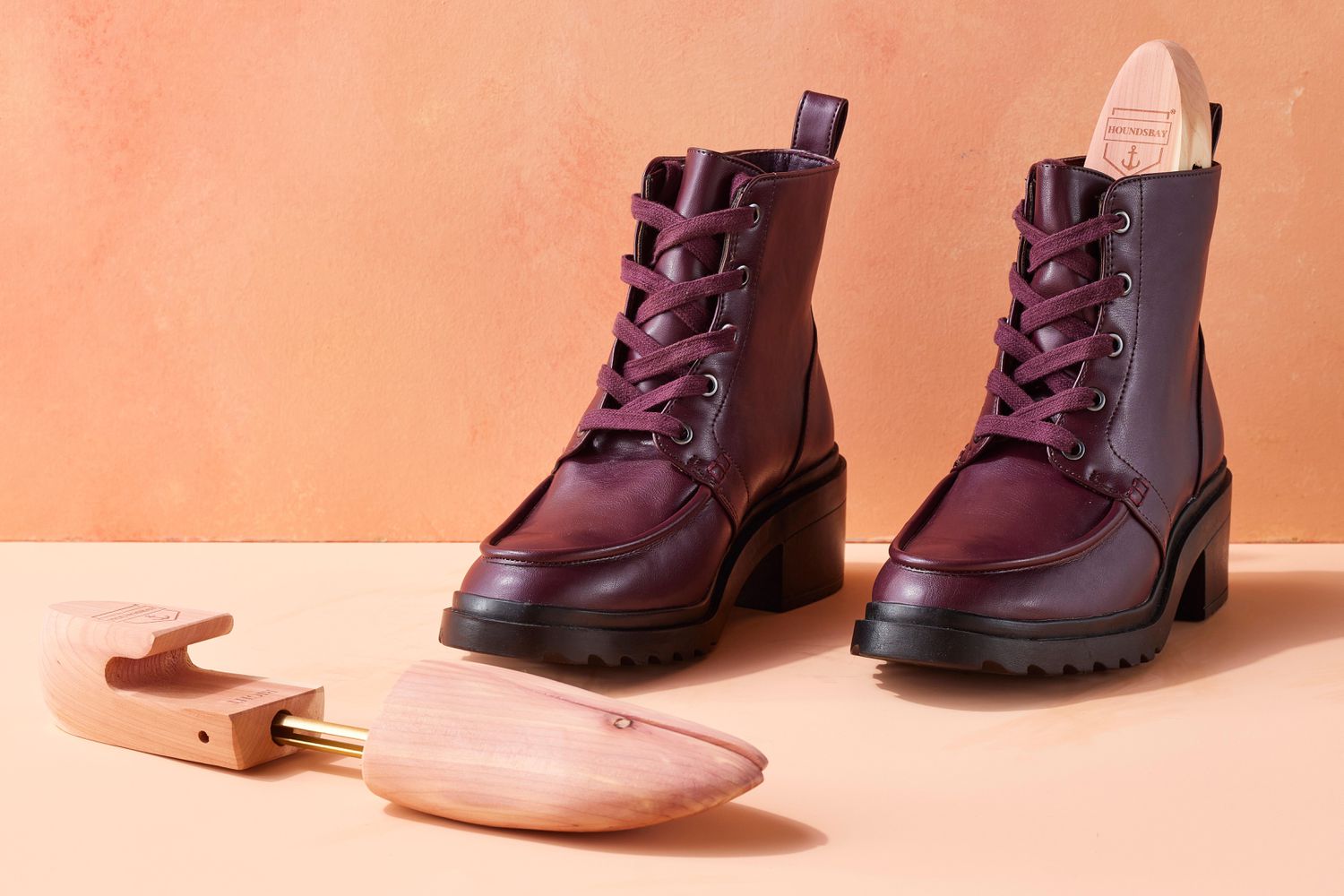
A boot stretcher can provide more controlled pressure than simply wearing thick socks.
These devices are placed inside the boot and expanded gradually to apply pressure to specific areas.
Some models are designed for length, while others focus on width. Certain stretchers also include small plugs that can target bunions or other pressure points.
Insert the stretcher according to its instructions and expand it slowly.
Avoid turning it as far as possible immediately. Too much pressure can damage stitching, distort the upper, or place unnecessary stress on the sole.
Leaving the stretcher in place overnight may be enough for minor adjustments.
The process can be repeated gradually if more room is needed.
Consider a Leather Stretching Spray
Leather stretching sprays are designed to soften certain materials temporarily, making them easier to shape.
Before applying any product, check whether it is suitable for the specific leather used in your boots.
Always test a small, hidden area first. Some products can slightly affect the color or finish.
After applying the spray to the tight area, you can wear the boots with thick socks or use a boot stretcher.
The combination of moisture, pressure, and controlled movement may help the leather adjust more easily.
Avoid soaking the boots. Excessive moisture can damage leather, adhesives, linings, or decorative finishes.
Use Gentle Heat With Care
Heat can make some leather more flexible, but this method requires caution.
Put on thick socks and wear the boots. Use a hair dryer on a low or moderate setting and direct warm air toward the tight area for short periods.
Keep the dryer moving rather than holding it in one spot.
As the leather warms, flex your foot gently to encourage movement in the material.
Remove the heat after about 20 to 30 seconds and continue wearing the boots until they cool.
Too much heat can dry out leather, weaken adhesives, or damage finishes, so moderation is essential.
Applying a suitable leather conditioner afterward may help replace some moisture lost during heating.
Be Careful With the Freezer Method
A commonly discussed home method involves filling sealed bags with water, placing them inside the boots, and freezing them so expanding ice creates pressure.
Although this approach may work in some situations, it also carries risks.
Water leaks can damage leather and linings, while uncontrolled expansion may stretch the boots unevenly.
Freezing temperatures may also affect certain adhesives or finishes.
For valuable leather boots, controlled stretching with socks or a boot stretcher is usually the safer choice.
If you decide to use any moisture-based method, protecting the interior and avoiding direct contact between water and leather is important.
Stretching the Boot Shaft
A tight shaft can be uncomfortable, especially around the calf.
Boot shaft stretchers are made specifically for this purpose and can provide steady, even pressure.
Another simple option is to wear thick socks or leggings and spend short periods walking in the boots.
Avoid stuffing the shaft aggressively with rigid objects. Uneven pressure can create unwanted bulges or damage the leather.
If the shaft is several inches too narrow, home stretching may not be enough. A cobbler may be able to assess whether professional alteration is possible.
Know Which Materials Can Be Stretched
Natural leather usually responds better to stretching than many synthetic materials because it can soften and conform with wear.
Suede can also stretch, but its finish requires extra care.
Synthetic uppers may have limited flexibility and can crack, separate, or permanently deform when exposed to excessive heat or pressure.
Western boots, work boots, fashion boots, and hiking boots may also include mixed materials, reinforced panels, waterproof membranes, or protective components that limit how much they can be altered.
Check the manufacturer’s care instructions before trying aggressive methods.
Avoid Overstretching
More space is not always better.
Overstretching can cause the heel to slip, create wrinkles, weaken stitching, or change the way the boot supports the foot.
Make small adjustments and test the fit after each stretching session.
If one area still feels tight, focus on that spot rather than continuing to expand the whole boot.
Remember that leather often loosens naturally with normal wear, so patience can prevent unnecessary changes.
When to Visit a Professional Cobbler
Home methods work best for minor fit problems.
If the boots are expensive, made from delicate leather, significantly too tight, or causing persistent pain, professional help may be a better choice.
Cobblers have specialized equipment that can apply controlled pressure to specific areas and may be able to stretch boots more safely than improvised home techniques.
They can also identify whether the problem is actually caused by sizing, construction, or another issue that stretching will not solve.
Make Small Adjustments for a Better Fit
Boot stretching should be gradual and focused on creating a small amount of extra room where it is needed most. Thick socks, boot stretchers, suitable stretching sprays, and careful heat can all help in the right situation, while aggressive methods may cause permanent damage. For more guidance on boot fit, care, and footwear options, visit Boots Plus More and explore practical resources for keeping your boots comfortable.
