



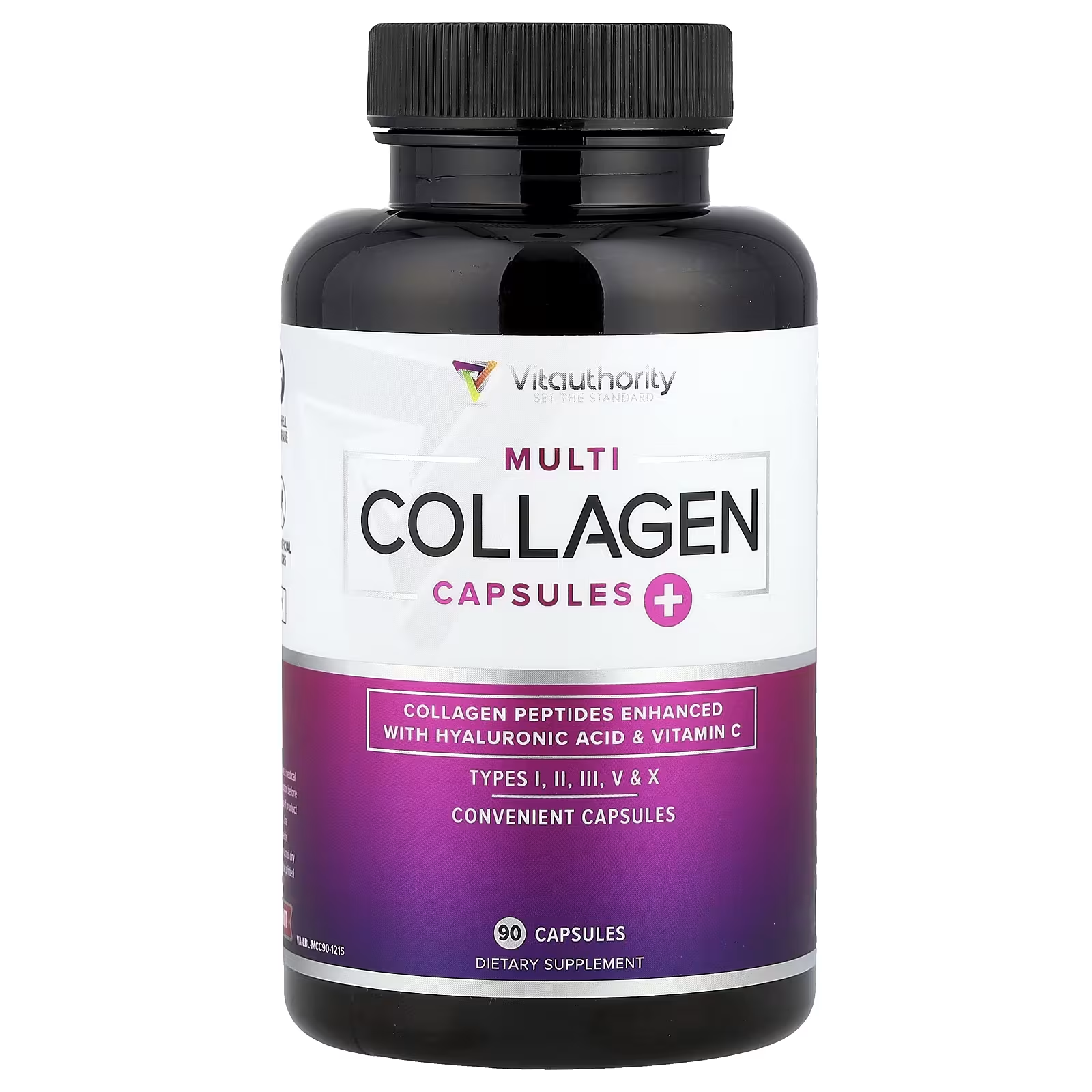
Collagen supplements now come in several forms, including powders, gummies, liquids, and capsules. For people who prefer a portable option without mixing powders into food or drinks, multi collagen capsules can be a convenient choice. Before adding them to a routine, it helps to understand what “multi collagen” means, where the collagen comes from, how serving sizes differ, and what information to review on the label.
What Does Multi Collagen Mean?
Collagen is a structural protein naturally found in different tissues throughout the body.
There are numerous collagen types, although Types I, II, and III are among those most commonly discussed in nutrition products. Some multi-collagen formulas also include Types V and X.
The term “multi collagen” generally refers to a supplement containing more than one collagen type or collagen obtained from several sources.
That does not automatically make one formula better than another. The quality of the ingredients, serving amount, source, processing, and suitability for the individual still matter.
Consumers should check the actual Supplement Facts and ingredient list rather than choosing based only on the words printed on the front label.
Why Choose Capsules Instead of Powder?
Convenience is one of the main reasons people choose capsules.
Collagen powders require measuring and mixing, while capsules can usually be taken with water as part of an existing supplement routine.
Capsules may be especially practical for people who:
- Travel frequently
- Do not like the taste of collagen powder
- Prefer pre-measured servings
- Already take other supplements in capsule form
- Do not regularly make smoothies or shakes
However, capsule serving sizes deserve attention.
Because capsules can only hold a limited amount of material, a full serving may require more than one capsule. Always check how many capsules make up the recommended serving rather than assuming one capsule equals one serving.
Understand the Different Collagen Types
Different collagen types occur naturally in different tissues.
Type I is widely found in areas such as skin, bone, and connective tissue. Type II is associated primarily with cartilage, while Type III commonly occurs alongside Type I in various connective tissues.
Types V and X occur in smaller amounts and are associated with particular structural tissues.
When these types appear on supplement labels, they describe the collagen included in the formula. They should not be interpreted as guarantees of a particular health outcome.
The body digests dietary collagen into smaller peptides and amino acids, which can then enter the body’s normal pool of nutrients used for various biological processes.
Check the Collagen Sources
Multi-collagen products may use collagen derived from several animal sources.
Depending on the formula, sources can include:
- Bovine
- Chicken
- Fish
- Eggshell membrane
Source information matters for dietary preferences and allergies.
Anyone with fish, egg, or other food allergies should read the label carefully before using a multi-source formula.
People following specific dietary practices should also verify where every collagen ingredient comes from.
A product containing several collagen types may also contain several source ingredients, so it is worth reviewing the complete ingredient list rather than relying on a short product description.
Look at the Amount Per Serving
The word “multi” tells you about variety, but it does not tell you how much collagen you are getting.
Check the Supplement Facts panel for the total quantity per serving and compare that with the number of capsules required.
Different products can vary considerably.
One bottle may contain many capsules but provide relatively few servings if several capsules are needed each day.
When comparing options, calculate:
- Capsules per serving
- Servings per container
- Total collagen per serving
- Suggested frequency
This gives a clearer picture of how the product fits into your routine and how long each bottle may last.
Review the Full Ingredient List
Collagen may be the main ingredient, but it is not always the only one.
Some capsule formulas contain added vitamins, minerals, herbs, or other dietary ingredients.
Others may use a relatively short formula focused primarily on collagen.
Neither approach is automatically preferable.
The important point is knowing exactly what you are taking, especially if you already use a multivitamin or several other supplements.
Check for duplicated nutrients and ingredients you may not need.
The label should also identify capsule materials, potential allergens, serving instructions, and storage recommendations.
Remember That Collagen Is Not a Complete Protein
Collagen contains amino acids, but it should not replace complete dietary protein sources.
A balanced diet should still include appropriate sources of protein such as eggs, dairy foods, fish, poultry, meat, soy foods, beans, lentils, or other suitable foods.
Collagen supplements are better viewed as an optional addition to a broader nutrition routine rather than the primary source of protein.
Overall eating habits matter more than any single supplement.
Fruits, vegetables, whole grains, healthy fats, and varied protein sources all contribute nutrients involved in normal body functions.
Avoid Assuming More Is Better
Taking additional capsules beyond the suggested serving does not automatically provide additional value.
Follow the label directions unless a qualified healthcare professional recommends a different approach.
This is particularly important when several supplement products are used together.
It can be easy to focus on individual products without considering the total amount of nutrients and other ingredients consumed across the day.
A simpler supplement routine can also make it easier to track what you are taking and why.
Consider Your Personal Health Needs
Dietary supplements are not appropriate for everyone in exactly the same way.
People who take medications, have known food allergies, manage medical conditions, or are preparing for surgery should speak with a healthcare professional before adding a new supplement.
Pregnant or breastfeeding individuals should also seek medical guidance before using new dietary products.
Consumers should be cautious about supplement advertising that promises dramatic physical changes or presents collagen as a treatment for health conditions.
Collagen products should be approached as dietary supplements rather than medicines.
Make Convenience Part of the Decision
The best supplement format is often the one that fits naturally into a person’s routine.
Someone who enjoys smoothies may prefer collagen powder, while someone who travels frequently may find capsules easier.
Capsules also remove the need to measure powder or find a beverage that works well with the product.
On the other hand, people who dislike swallowing several capsules may find powder more convenient.
Think about what you are likely to use consistently rather than choosing based entirely on trends.
Choose Collagen With the Bigger Nutrition Picture in Mind
Multi-collagen formulas provide several collagen types in a convenient format, but shoppers should still compare sources, serving amounts, capsule counts, ingredients, and dietary suitability before making a choice. A supplement should complement a varied diet rather than replace nutritious foods or complete protein sources. Those interested in comparing collagen formats and learning more about available formulas can visit BioOptimal Supplements for additional product information.
