



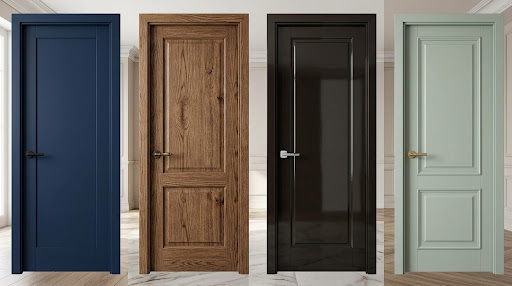
When people think about doors, they usually focus on shape and style. Is it a sliding door or a hinged one? Paneled or flush? Yet the surface of a door often has just as much influence on how a room feels. Color, texture, and finish determine whether a door blends quietly into the wall, adds warmth, or becomes a focal point.
Because doors appear throughout a home, their surfaces repeat from room to room. That repetition gives them a surprising amount of influence over the overall atmosphere of an interior.
Why Door Finishes Deserve Attention
A door finish affects more than appearance. It changes how light reflects, how the surface feels to the touch, and how well the door holds up over time. A glossy surface bounces light around a dim hallway, while a matte finish softens glare in a bright living room. A textured wood grain invites touch, while a smooth lacquer feels sleek and contemporary.
Choosing finishes thoughtfully helps doors support the mood of each space rather than working against it.
Popular Color Directions in Modern Interiors
Soft Neutrals
Warm whites, greige, sand, and pale stone colors remain popular because they create calm, flexible backdrops. Neutral doors work well in homes where furniture and art provide the main visual interest.
Deep and Moody Tones
Charcoal, deep green, navy, and dark brown have gained ground in modern design. Dark doors add drama and depth, particularly when set against lighter walls. They can also make a statement in studies, libraries, and dining rooms.
Tone-on-Tone Schemes
A more subtle approach is painting or finishing doors in the same color as the surrounding walls. This makes doors almost disappear, which suits minimalist interiors and smaller spaces that benefit from fewer visual interruptions.
Black Accents
Black-framed glass doors and matte black surfaces bring contrast and structure. Used carefully, they can sharpen an interior and give it an architectural edge.
Texture and Its Effect on Atmosphere
Texture is often overlooked, but it changes how a door is experienced up close.
Natural wood grain adds warmth and organic character. Oak, walnut, and ash each bring their own pattern and tone, from light and airy to rich and dark.
Brushed or wire-brushed surfaces emphasize grain and give wood a slightly tactile, relaxed appearance.
Smooth lacquer delivers a clean, uniform surface that suits sleek contemporary spaces.
Fluted or ribbed panels have become popular for adding rhythm and depth without heavy ornamentation. Vertical lines can also make a door appear taller.
Leather, fabric, or textured laminates appear in some high-end interiors, adding softness and an unexpected sense of luxury.
Matching Finishes to Architectural Style
Every home has its own architectural language, and door finishes should speak it fluently. Sleek, handle-free lacquered doors suit minimalist apartments, while textured wood doors suit warm modern homes with natural materials.
Homeowners working with specific color palettes or unusual finishes often find that standard ranges are limiting. Choosing Custom Modern Doors allows the finish, size, and design details to align closely with the contemporary architecture and interior scheme of the home, so doors feel like part of the original plan rather than an off-the-shelf addition.
Finish Quality and Craftsmanship
The difference between an average door and an exceptional one often comes down to the finish. Uneven coatings, visible brush marks, or poorly sealed edges become obvious over time, especially under natural light.
Italian manufacturers have built a strong reputation in this area, combining traditional craftsmanship with modern production techniques. Surfaces are carefully prepared, coatings are applied with precision, and details such as edges and frames receive as much attention as the main panel. For homeowners who want premium materials and a refined look throughout their interiors, Luxury Interior Italian Doors reflect that commitment to finish quality and sophisticated design.
Coordinating With Other Surfaces
High-end interiors often coordinate door finishes with wall panels, built-in wardrobes, and cabinetry. When these surfaces share the same material or tone, rooms feel calm and carefully composed. Even small alignments, such as matching door height to wardrobe height, add to this sense of order.
Practical Factors to Consider
Beauty should go hand in hand with durability. Before choosing a finish, think about how each door will be used.
- High-touch areas: Doors used constantly, like those to kitchens or bathrooms, benefit from finishes that resist fingerprints and are easy to clean.
- Humidity: Bathroom and laundry doors need surfaces that cope well with moisture.
- Light exposure: Some natural finishes may change tone over time when exposed to strong sunlight. Considering this early prevents surprises later.
- Children and pets: Durable, scratch-resistant finishes are worth considering in busy households.
- Repairability: Some surfaces are easier to touch up than others. Natural wood can often be refinished, while some high-gloss lacquers require professional attention.
Building a Consistent Scheme
A common approach is to choose one primary finish for most doors and use a contrasting finish for a few key locations. For example, light oak doors throughout the home might be paired with a dark lacquered door at the entrance to the main living area. This keeps the scheme consistent while allowing a few moments of emphasis.
Hardware also plays a role. Brushed brass handles can warm up neutral doors, while matte black hardware sharpens lighter finishes. Keeping hardware consistent across the home helps the overall scheme feel unified.
Conclusion
Door surfaces quietly shape the character of a home. The right color can calm a room or energize it; the right texture can add warmth or sharpen modern lines; and a high-quality finish ensures doors look good for years. By thinking carefully about how finishes interact with light, architecture, and daily use, homeowners can turn ordinary doors into thoughtful design features that make every room feel more complete.
