



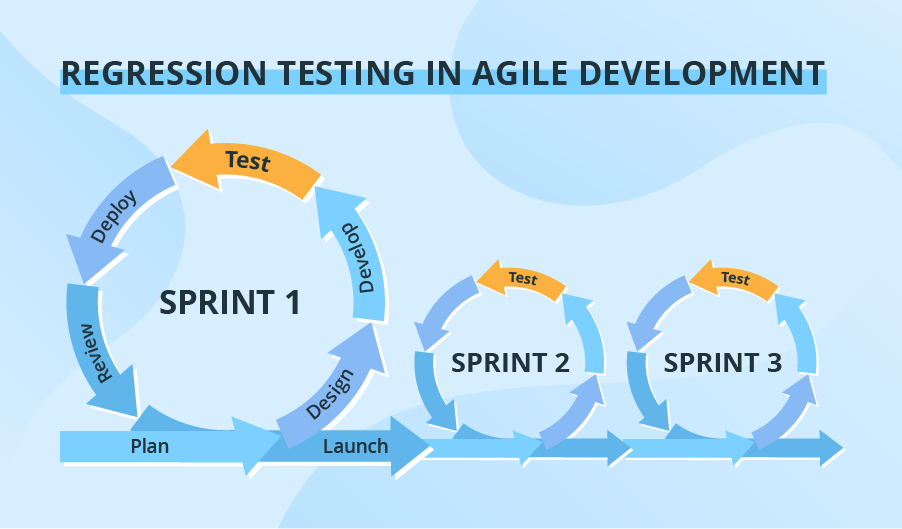
Regression testing was once the safety net of enterprise software delivery. Run a comprehensive suite, catch unintended defects, and release with confidence. But in today’s Agile and DevOps-driven enterprises where releases happen weekly or even daily—traditional regression testing is increasingly becoming a bottleneck rather than a safeguard.
Enterprise leaders are now asking a critical question: Why does regression testing fail to scale in Agile environments, and what must change? Modern software testing companies are being redefined to answer exactly this challenge.
The Original Purpose of Regression Testing and Why It No Longer Fits
Regression testing was designed for predictable release cycles and relatively stable architectures. Agile enterprises, however, operate with:
- Continuous code changes
- Microservices and distributed systems
- Frequent dependency updates
- Parallel development streams
In this context, large regression suites grow faster than they can be executed. Even well-funded QA teams struggle to keep pace, which is why many organizations are rethinking regression as part of broader quality engineering services rather than a standalone activity.
Key Reasons Regression Testing Breaks Down
1. Test Suites Grow Faster Than Delivery Cycles
In enterprise Agile programs, every sprint adds new test cases. Over time:
- Regression suites become bloated
- Execution time exceeds sprint timelines
- Teams start skipping or partially running tests
This creates a false sense of coverage, one of the most dangerous failure modes in Agile QA.
2. Automation Without Intelligence
Many enterprises invested heavily in automation but failed to modernize strategy. Automated regression suites often:
- Run the same tests regardless of code changes
- Lack prioritization based on risk
- Produce high maintenance overhead
Without intelligence, automation alone cannot solve regression complexity. This is why modern qa testing services increasingly integrate AI-based test selection and impact analysis.
3. Agile Architectures Increase Regression Risk
Microservices, APIs, and third-party integrations mean a small code change can have system-wide impact. Regression testing often fails because:
- Dependencies are poorly mapped
- Integration points are under-tested
- Environment inconsistencies invalidate results
To address this, enterprises are shifting regression ownership from QA-only teams to cross-functional quality engineering services models.
The Security Blind Spot in Regression Testing
Functional Coverage Is Not Enough
Traditional regression testing focuses on functionality, not security. In Agile environments, this creates a serious gap. Frequent changes can introduce vulnerabilities that go undetected.
Enterprises are now embedding penetration testing services into Agile pipelines to ensure:
- Security regressions are detected early
- APIs and integrations remain protected
- Compliance risks do not accumulate over sprints
When penetration testing services run continuously alongside functional regression, enterprises reduce both operational and reputational risk.
Data Snapshot: Regression Testing in Agile Enterprises
Enterprise testing trends reveal:
- Over 60% of Agile teams report regression testing as their primary release bottleneck
- Nearly 50% of regression test cases executed in large enterprises add minimal risk coverage
- Organizations adopting AI-driven regression prioritization reduce test execution time by 35–45%
These insights explain why regression testing must evolve to stay relevant.
How Leading Enterprises Are Fixing Regression Testing
1. From Full Regression to Risk-Based Regression
Instead of testing everything, enterprises now:
- Analyze code changes and dependencies
- Prioritize tests based on business and technical risk
- Focus regression on revenue-critical and customer-facing flows
This approach dramatically improves efficiency within software testing services.
2. AI-Driven Test Selection and Optimization
AI-driven testing platforms help enterprises:
- Predict which tests are most likely to fail
- Eliminate redundant test cases
- Continuously refine regression scope
This is quickly becoming a standard capability within modern qa testing services.
3. Shifting Regression Left and Right
Regression is no longer a single phase. Enterprises now:
- Shift left by validating changes earlier in development
- Shift right by using production insights to refine test coverage
This continuous feedback loop is a defining feature of advanced quality engineering services.
Governance Challenges in Enterprise Agile Programs
Regression Ownership Is Often Unclear
In large organizations:
- QA teams own regression execution
- Development teams own code changes
- Operations teams handle production issues
This fragmentation causes regression blind spots. Successful enterprises establish shared quality accountability, supported by centralized metrics and tooling.
The Role of External Testing Partners
Many enterprises rely on specialized software testing services providers to:
- Rationalize bloated regression suites
- Introduce AI-driven test intelligence
- Integrate security testing into Agile workflows
These partnerships accelerate transformation without disrupting delivery velocity.
Conclusion: Regression Testing Must Evolve or Be Replaced
Regression testing breaks down in enterprise Agile environments not because it’s unnecessary, but because it’s outdated. Static, exhaustive regression models cannot keep up with dynamic delivery pipelines.
Enterprises that modernize regression through intelligent qa testing services, continuous penetration testing services, and scalable quality engineering services reduce release risk without slowing innovation.
In Agile enterprises, regression success is measured by confidence not test volume.
FAQs
- Why does regression testing slow down Agile releases?
Because traditional regression suites are too large and poorly prioritized for short sprint cycles. - How do software testing services modernize regression testing?
By using AI-driven prioritization, risk-based selection, and continuous feedback loops. - Is automation alone enough to fix regression issues?
No. Automation without intelligence increases maintenance and execution overhead. - Why include penetration testing services in regression?
To detect security regressions introduced by frequent code and dependency changes. - What role do quality engineering services play in Agile regression?
They embed quality across the lifecycle rather than isolating it in a testing phase.
