


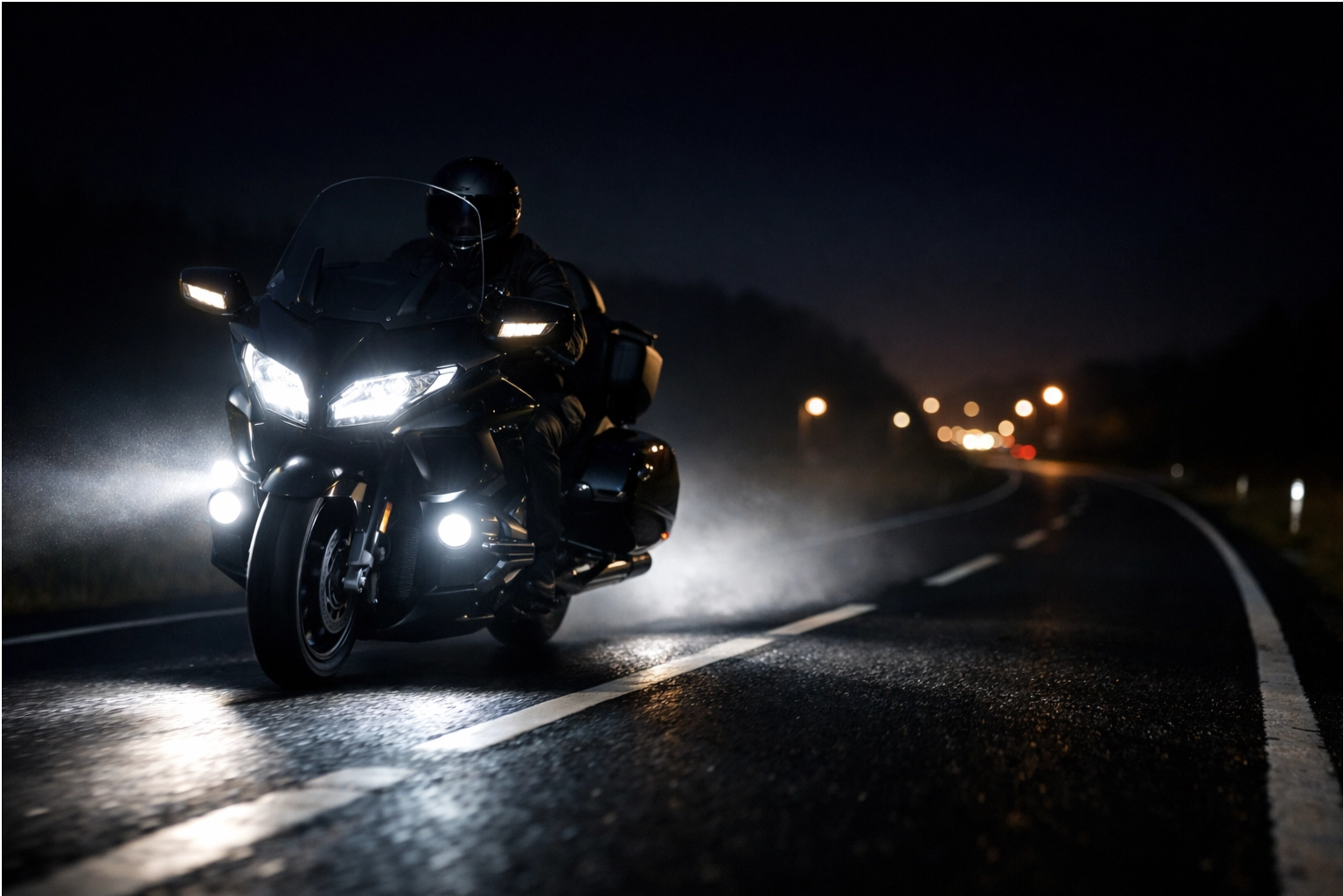
Every seasoned touring rider knows that moment when dusk transforms into darkness on an unfamiliar highway. Your headlight beam suddenly feels inadequate, shadows deepen across the asphalt, and that confident feeling from daylight riding evaporates. This experience drives thousands of motorcycle enthusiasts to explore lighting upgrades for better night visibility each year, with Goldwing LED lighting upgrades becoming the gold standard for touring motorcycles.
Having logged over 200,000 miles on touring bikes across North America, I’ve experienced firsthand how proper illumination transforms night riding from nerve-wracking to genuinely enjoyable. The difference between factory lighting and modern LED systems isn’t merely incremental. It’s revolutionary.
Why Factory Motorcycle Lighting Falls Short
Most touring motorcycles leave the factory with adequate but uninspiring lighting systems. Manufacturers balance cost, power consumption, and minimum safety requirements, which rarely delivers optimal performance for serious touring riders. Traditional halogen bulbs produce yellowish light that struggles to penetrate darkness effectively, while their limited lifespan means frequent replacements during long-distance adventures.
The physics of halogen technology reveals inherent limitations. These bulbs waste roughly seventy percent of their energy as heat rather than light, stressing your motorcycle’s electrical system while delivering mediocre illumination. When you’re navigating mountain switchbacks at night or watching for wildlife on rural highways, this compromise becomes a genuine safety concern.
Modern riders demand better because the consequences of poor visibility extend beyond mere inconvenience. Delayed hazard recognition, increased eye fatigue, and reduced conspicuity to other motorists create a perfect storm of risk factors that sophisticated lighting systems effectively mitigate.
The LED Lighting Revolution for Touring Motorcycles
Light Emitting Diode technology has fundamentally changed automotive and motorcycle illumination over the past decade. These solid-state components produce intense, focused light while consuming a fraction of the power traditional bulbs require. The transformation proves particularly dramatic for touring motorcycles where electrical capacity matters and reliability is non-negotiable.
Goldwing LED lighting upgrades exemplify this technological leap. These comprehensive systems replace multiple lighting components simultaneously, including headlights, fog lights, auxiliary lamps, and marker lights, creating a cohesive illumination strategy. The result resembles the lighting quality found in luxury automobiles, with crisp white light that enhances color recognition and depth perception.
The color temperature distinction becomes immediately noticeable. Quality LED systems operate between 5500K and 6500K, producing daylight-spectrum illumination that makes road signs pop, improves contrast, and reduces the visual fatigue associated with prolonged night riding. Your eyes process this natural-spectrum light more efficiently, maintaining alertness during those crucial late-evening miles.
Comprehensive Visibility Enhancement Strategy
Effective lighting upgrades for better night visibility require a systematic approach addressing multiple illumination zones. Simply installing brighter headlights solves only part of the visibility equation. Professional touring riders consider their entire lighting profile, creating layers of illumination that work synergistically.
Primary Headlight Conversion
Primary headlight conversion forms the foundation. Modern LED headlamps deliver three to four times the usable light of halogen predecessors while drawing less amperage. The beam pattern becomes sharper with better definition between high and low settings, illuminating road surfaces without blinding oncoming traffic.
This precision engineering represents a quantum leap from the diffuse, yellowish pools cast by conventional bulbs.
Auxiliary Lighting for Roadside Coverage
Auxiliary lighting expands your visibility envelope dramatically. Strategically positioned driving lights or fog lamps fill the dark zones beyond your main beam, illuminating the roadside where animals might emerge. These supplementary systems also increase your conspicuity, making you more visible to distracted drivers who might otherwise overlook a single headlight.
Rear Lighting for Being Seen
Rear lighting deserves equal attention despite receiving less focus from riders. Enhanced brake lights respond instantaneously when activated, giving following vehicles crucial additional reaction time. Sequential turn signals and integrated running lights further improve your visibility profile, particularly important when larger vehicles approach from behind.
Installation Considerations and Technical Requirements
Modern Goldwing LED lighting upgrades feature plug-and-play designs that respect your motorcycle’s electrical architecture. These engineered systems integrate seamlessly without requiring extensive wiring modifications or voltage regulators. The installation process typically involves removing factory components and connecting upgraded modules using existing harness connections.
Heat management remains important despite LED technology running significantly cooler than halogens. Premium systems incorporate aluminum heat sinks or active cooling fans maintaining optimal operating temperatures. This thermal control directly influences longevity, with quality LED assemblies routinely exceeding thirty thousand hours of continuous operation.
Proper beam alignment after installation ensures you maximize illumination effectiveness while maintaining courtesy toward oncoming traffic. The goal involves projecting light onto the road surface rather than into the eyes of approaching drivers, a balance that quality systems achieve through precision reflector design and adjustable mounting hardware.
Measurable Performance Improvements
The transformation becomes apparent immediately during your first post-upgrade night ride. Road texture details emerge clearly, pavement irregularities become obvious earlier, and overall situational awareness improves dramatically. Your brain processes visual information faster because the improved light quality reduces cognitive load.
Other motorists respond differently to your presence as well. The distinctive appearance and increased intensity of modern LED lighting creates instant recognition, cutting through the visual clutter of modern highways. This enhanced conspicuity translates directly into safer riding through reduced close calls and improved driver yielding behavior.
Weather performance represents another significant advantage. LED lighting maintains effectiveness through fog, mist, and light precipitation where traditional systems struggle. The focused beam pattern and superior light output penetrate atmospheric conditions that would otherwise severely compromise visibility.
Long-Term Value and Return on Investment
Quality lighting upgrades for better night visibility require meaningful upfront investment, typically ranging from several hundred to over a thousand dollars depending on system comprehensiveness. However, the return manifests through multiple channels that extend far beyond simple illumination improvement.
Electrical system efficiency gains prove substantial. LED components draw minimal current compared to halogen equivalents, preserving charging capacity for heated gear, communication systems, navigation equipment, and other touring accessories. This efficiency becomes increasingly important as modern riders equip their motorcycles with more electronic conveniences.
Maintenance elimination represents another benefit. LED longevity means you’ll likely never replace these components during your ownership period, eliminating roadside bulb failures and the associated downtime. This reliability proves invaluable during extended tours through remote areas where replacement parts might be unavailable.
Creating Your Personal Safety Enhancement Plan
Night riding transforms from challenging necessity to genuinely enjoyable experience when appropriate lighting upgrades for better night visibility are thoughtfully implemented. The combination of superior road illumination, enhanced visibility to other motorists, and reduced rider fatigue creates comprehensive safety improvements that extend well beyond simple component replacement.
Whether you’re planning weekend escapes or transcontinental expeditions, investing in professional-grade lighting systems delivers returns every time darkness falls. The confidence accompanying superior visibility allows you to focus on your journey’s rewards rather than straining to identify hazards lurking in shadows ahead.
FAQs
Do aftermarket LED systems comply with road-legal lighting rules?
Riders frequently question whether aftermarket LED systems comply with vehicle lighting regulations. Properly engineered products designed for specific motorcycle models meet Department of Transportation standards and maintain full street legality. Generic components may not offer equivalent compliance assurance, emphasizing the importance of selecting reputable manufacturers with proven track records.
How difficult is installation for most touring riders?
Installation complexity varies based on upgrade scope and motorcycle design. Many Goldwing LED lighting upgrades feature straightforward replacement procedures manageable by mechanically competent owners, while comprehensive systems might warrant professional installation ensuring optimal performance and warranty protection.
Will LED lighting work on older touring motorcycles?
Compatibility with older touring motorcycles occasionally raises concerns regarding electrical system capacity. Modern LED components draw such minimal current that they’re suitable even for vintage machines, though some installations may benefit from voltage stabilizers or relay additions ensuring consistent performance and maximum component longevity.
