



A Journey from Imperial Splendor to Desert Majesty
The adventure from Marrakech to Dades Valley is one of Morocco’s most breathtaking travel experiences. On Day 1 of this unforgettable journey, travelers leave behind the vibrant rhythm of Marrakech and head toward the dramatic landscapes of southern Morocco. The route takes you across the magnificent High Atlas Mountains via the legendary Tizi n’Tichka Pass, offering panoramic views, cultural encounters, and geological wonders that set the tone for an extraordinary desert expedition.
This first day is not merely a transfer between destinations—it is an immersive journey through changing climates, landscapes, and centuries-old Berber heritage.
Departure from Marrakech
Your journey begins in the enchanting city of Marrakech, often referred to as the “Red City” because of its terracotta-colored buildings. Before departure, the early morning light bathes the city’s historic walls, mosques, and bustling streets in warm tones. Marrakech is a cultural treasure, home to landmarks such as the Koutoubia Mosque and the vibrant Jemaa el-Fnaa square, where storytellers, musicians, and traders animate the heart of the medina.
As you leave the city behind, urban life gradually gives way to olive groves, orange orchards, and small roadside villages. The landscape begins to rise steadily toward the majestic High Atlas Mountains, signaling the start of a remarkable transition from city life to mountain wilderness.
Crossing the High Atlas Mountains
The High Atlas Mountains form the backbone of Morocco, stretching across the country and acting as a natural barrier between the Atlantic coast and the Sahara Desert. As you ascend, the air becomes cooler and the scenery more dramatic. Towering peaks, deep valleys, and traditional Amazigh (Berber) villages cling to the mountainsides.
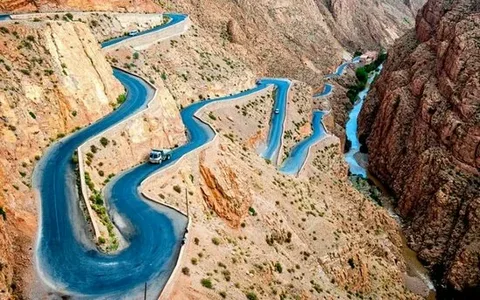
The road winds through steep inclines and hairpin bends, revealing spectacular views at every turn. Shepherds guide their flocks across rocky slopes, and terraced fields carved into the mountains demonstrate the resilience and ingenuity of local communities. This region remains deeply rooted in Amazigh culture, with villages built from mudbrick blending harmoniously into the surrounding earth tones.
Traveling this route offers insight into rural Moroccan life—simple, authentic, and closely connected to nature.
Tizi n’Tichka Pass – The Gateway to the South
The highlight of the mountain crossing is the famous Tizi n’Tichka pass, which rises to an elevation of approximately 2,260 meters (7,415 feet) above sea level. It is the highest major mountain pass in Morocco and a crucial connection between Marrakech and the southern desert regions.
The name “Tizi n’Tichka” means “Difficult Mountain Pass” in the Amazigh language, and historically it was a challenging route used by traders and caravans moving goods between Marrakech and the Sahara. Today, the paved road makes the crossing more accessible, yet it retains its sense of adventure.
At the summit, travelers often stop to admire panoramic views stretching across jagged peaks and expansive valleys. In winter, snow may dust the mountaintops, while in spring, wildflowers add bursts of color to the rugged terrain. The pass provides a powerful reminder of Morocco’s diverse geography and the dramatic natural forces that shaped it.
Aït Benhaddou – A Step Back in Time
Descending from the High Atlas, the landscape begins to change once again. Lush valleys give way to arid plains and ancient kasbahs built from clay and straw. One of the most remarkable stops along the way is Aït Benhaddou, a fortified village (ksar) recognized as a UNESCO World Heritage Site.
This iconic settlement, with its earthen towers and narrow alleys, has stood for centuries as a key stop along former caravan routes. Its architecture exemplifies southern Moroccan design—thick walls to protect against heat and strategic positioning for defense. Aït Benhaddou has also served as a backdrop for numerous international films and television series, thanks to its cinematic beauty and preserved authenticity.
Walking through its winding passageways feels like stepping into history, offering travelers a tangible connection to Morocco’s trading and cultural legacy.
Ouarzazate – The Hollywood of Morocco
Continuing onward, you may pass through Ouarzazate, often called the “Gateway to the Sahara.” This city is known for its film studios and dramatic desert scenery. Though typically a brief stop on Day 1, Ouarzazate marks the transition from the mountain region to the pre-Saharan landscape.
Here, palm groves and kasbahs stand against vast open skies, and the architecture reflects centuries of desert adaptation.
The Road of a Thousand Kasbahs
As the journey continues toward Dades Valley, the terrain becomes increasingly dramatic. This region is often referred to as the “Road of a Thousand Kasbahs” due to the abundance of fortified homes and ancient strongholds scattered throughout the valleys.
Mudbrick kasbahs rise from the earth in shades of ochre and gold. Many are centuries old, though some have been restored as guesthouses. These structures reflect the region’s historical importance as a crossroads of trade and tribal power.
The changing light of late afternoon enhances the rich red tones of the landscape, creating a scene that feels both timeless and surreal.
Arrival at Dades Valley
By evening, you reach the spectacular Dades Valley, often called the “Valley of a Thousand Kasbahs.” Located between the Atlas Mountains and the desert, this valley is famous for its dramatic rock formations, lush palm groves, and winding river.
The Dades River has carved impressive gorges and sculpted unusual rock formations known as “Monkey Fingers” due to their distinctive shape. The valley’s fertile soil supports roses, almonds, and date palms, offering a surprising contrast to the surrounding arid mountains.
As the sun sets, the canyon walls glow in hues of red and orange, creating a peaceful and unforgettable atmosphere. After a full day of travel, guests typically settle into a traditional guesthouse or riad, where they can enjoy Moroccan hospitality and cuisine while reflecting on the day’s extraordinary journey.
Cultural and Scenic Diversity in a Single Day
Day 1 from Marrakech to Dades Valley showcases Morocco’s extraordinary geographic and cultural diversity:
- Bustling imperial city life
- Snow-capped mountain passes
- Ancient Amazigh villages
- UNESCO-listed ksars
- Pre-Saharan desert landscapes
- Fertile river valleys carved into red rock
Few routes in North Africa offer such a dramatic transformation within a single day’s drive. Crossing the High Atlas Mountains via the Tizi n’Tichka Pass is not only a scenic highlight but also a symbolic passage—from the energy of Marrakech to the tranquil beauty of southern Morocco.
Conclusion
The journey from Marrakech to Dades Valley is far more than transportation between two destinations—it is an immersive introduction to Morocco’s natural grandeur and cultural heritage. Crossing the High Atlas Mountains via the Tizi n’Tichka Pass provides sweeping vistas, historical insight, and unforgettable moments of awe.
By the time you arrive in Dades Valley, you will have traveled through centuries of history and across some of the country’s most stunning terrain. Day 1 sets the tone for deeper exploration ahead, whether continuing toward the Sahara Desert or discovering more hidden gems of southern Morocco.
