



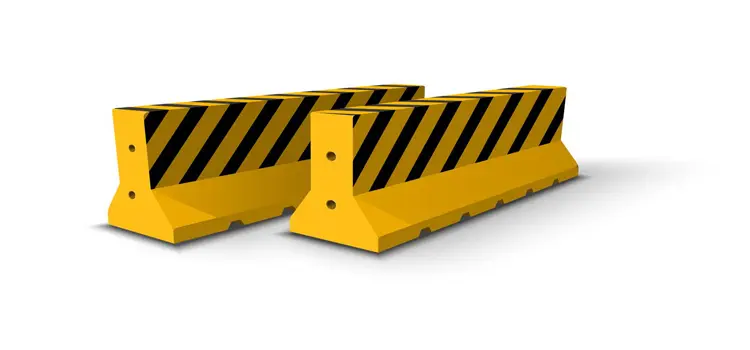
The decision to use concrete barriers is rarely the difficult part of a perimeter or work zone project. The vehicle-stopping mass, the modular deployment flexibility, and the established performance record of concrete barrier systems make them the obvious specification for any application where vehicle mitigation is a genuine requirement rather than a precautionary gesture. The difficult part — the part where projects encounter delays, cost overruns, and operational problems that concrete barrier performance itself would never have caused — is the procurement process. Concrete barrier rental involves a set of logistical, regulatory, and operational variables that project managers who have not navigated them before consistently underestimate, and that experienced procurement teams address systematically before the first barrier unit arrives on site. This guide covers those variables in the sequence that effective procurement addresses them — so that the concrete barrier system specified for a project performs as designed from day one rather than revealing procurement gaps after deployment has begun.
Step One: Defining the Requirement Before Contacting Providers
The most common procurement mistake for concrete barrier rental is contacting rental providers before the requirement has been defined with sufficient precision — producing quotes that cannot be compared accurately, site assessments that must be repeated after requirement clarification, and delivery schedules that shift when the actual specification differs from the initial inquiry.
Defining the requirement before provider contact requires answers to four questions:
What is the primary function of the barrier system? Vehicle mitigation for a construction work zone has different specification implications than vehicle exclusion for an event perimeter, which has different implications than traffic separation for a road closure. The primary function determines the barrier mass, height, and connection hardware requirements that the specification must meet — and communicates to rental providers the performance standard they are being asked to supply rather than leaving specification to their discretion.
What is the linear footage of barrier coverage required? Calculating the perimeter or barrier line length that the project requires — accounting for all boundary segments, access points, and corner configurations — produces the unit quantity requirement that drives rental cost and delivery logistics. Underestimating linear footage at the inquiry stage produces quotes that do not cover the actual requirement and delivery schedules that require supplementary deliveries after initial installation.
What is the deployment duration? Concrete barrier rental is priced on a duration basis — daily, weekly, or monthly rates that vary significantly across rental providers and that determine the total rental cost more than unit quantity alone for extended deployments. Defining the deployment duration at the inquiry stage allows accurate cost comparison across providers and identifies the duration pricing structure — daily rates for short deployments, monthly rates for extended construction projects — that produces the best cost outcome for the specific project timeline.
What are the site access conditions? Concrete barrier placement requires crane trucks or forklifts whose physical dimensions, weight, and turning radius create site access requirements that not every deployment location accommodates without advance preparation. Identifying site access constraints — overhead clearance, access road width, ground load bearing capacity, and proximity to utilities — before provider contact allows rental providers to specify appropriate delivery equipment and identify access solutions before delivery day rather than discovering constraints on arrival.
Step Two: Understanding Permit Requirements Before Committing to a Timeline
Concrete barrier deployment on public roads, sidewalks, municipal property, or within the right-of-way of any public infrastructure typically requires permits from one or more municipal authorities — and permit processing timelines that project managers who have not navigated them before consistently underestimate can delay deployment by days or weeks beyond the planned start date.
Traffic control permits. Concrete barrier deployment that affects vehicle traffic flow — lane closures, road narrowing, or access point restrictions — requires traffic control permits that specify the barrier configuration, the traffic management measures that accompany it, and the duration of the traffic impact. Traffic control permit applications typically require a traffic control plan prepared by a qualified traffic engineer — a requirement that adds both time and cost to the permit process that project timelines must account for.
Right-of-way permits. Barrier deployment within the public right-of-way — the zone between the property line and the road edge that includes sidewalks, utility easements, and the road shoulder — requires right-of-way permits that authorize temporary occupation of public space for private project purposes. Right-of-way permit processing times vary significantly across municipal jurisdictions — from same-day approval in some jurisdictions to multi-week review processes in others.
Special event permits. Concrete barrier deployment for events on public property — festivals, public gatherings, and civic events that occupy public parks, plazas, or streets — requires special event permits that address barrier deployment as one component of the broader event approval process. Special event permit applications typically require submission sixty to ninety days before the event date in most jurisdictions — a timeline that concrete barrier rental procurement must be initiated well in advance of.
The practical procurement implication of permit requirements is straightforward: identify all applicable permit requirements and their processing timelines before committing to a deployment start date, and build permit processing time into the project schedule rather than treating permits as a parallel process that will resolve itself alongside other project preparation activities.
Step Three: Site Preparation for Concrete Barrier Delivery
Concrete barrier delivery and placement is a heavy equipment operation — one whose successful execution depends on site conditions that the delivery crew encounters on arrival rather than the conditions that existed when the site was assessed during the planning phase. Site preparation before delivery eliminates the on-site problem-solving that unprepared sites impose on delivery crews and that delays barrier installation beyond the planned schedule.
Ground surface preparation. Concrete barriers placed on soft, unstable, or uneven ground settle unevenly after placement — producing barrier lines that develop gaps, misalignments, and instability that compromise both the appearance and the structural function of the installation. Ensuring that the barrier placement surface is firm, level, and capable of supporting the sustained point loads that concrete barrier units impose — typically through compaction of soft ground or placement of temporary surface protection over sensitive paving — prevents settlement problems after installation.
Overhead clearance verification. Crane trucks used for concrete barrier placement require vertical clearance that overhead utilities, structural elements, and tree canopy may not provide at every point along the planned barrier line. Verifying overhead clearance along the complete barrier placement route — not just at the delivery access point — identifies clearance constraints that require alternative placement equipment or barrier line routing adjustments before delivery day.
Utility marking. Concrete barrier placement adjacent to underground utilities — water, gas, electrical, and telecommunications infrastructure — requires utility marking to confirm that placement equipment does not damage subsurface infrastructure during operation. Utility marking services — available through municipal one-call systems in most jurisdictions — should be requested well in advance of the planned delivery date to ensure marking is complete before equipment arrives on site.
Access point identification and preparation. The delivery route from the site access point to the barrier placement location must accommodate the full dimensions of the delivery vehicle — including turning radius requirements that articulated crane trucks impose that standard vehicle access planning does not account for. Walking the delivery route with delivery vehicle dimensions in mind before delivery day identifies route constraints that require preparation — temporary fencing removal, vehicle relocation, or surface protection installation — that cannot be addressed after the delivery vehicle has arrived.
Step Four: Coordinating Delivery, Installation, and the Rental Period
Concrete barrier rental delivery coordination involves variables that project managers experienced with standard construction material delivery do not always anticipate — because concrete barrier delivery is a placement operation rather than a drop-and-go material delivery whose execution depends on conditions at the delivery location rather than simply the delivery address.
Delivery window confirmation. Concrete barrier delivery and placement takes significantly longer than standard material delivery — a 50-unit installation that covers 400 linear feet of barrier line may require three to four hours of crane operation to place and connect correctly. Confirming a delivery window rather than a delivery time — and ensuring that the project site is prepared and accessible for the full duration of the installation operation — prevents the incomplete installations that result when delivery windows are treated as fixed delivery times that end at the scheduled hour regardless of installation progress.
On-site supervision during installation. A project representative with authority to make layout decisions should be present during concrete barrier installation — confirming barrier line positioning, access gate locations, and connection configurations as installation proceeds rather than reviewing a completed installation that requires repositioning to address layout errors. Repositioning concrete barriers after initial placement requires the same crane operation as initial placement — doubling the equipment time and cost that correct initial positioning would have avoided.
Rental period extension planning. Construction project timelines shift, event permits encounter processing delays, and municipal deployments encounter the unpredictable scheduling changes that public-sector project management involves. Confirming the rental provider’s extension terms — the notice period required for extension requests, the rate at which extensions are priced, and the inventory availability that determines whether extensions can be accommodated — before the rental period begins prevents the scheduling conflicts and cost surprises that unplanned extensions create when addressed after the original rental period has begun.
Step Five: Recovery Planning That Protects the Project Closeout
Concrete barrier recovery is the procurement phase that project managers most consistently underplan — treating it as a straightforward reversal of the delivery process rather than an operation with its own logistical requirements and scheduling dependencies.
Recovery timing relative to project closeout. Concrete barrier recovery requires the same crane equipment and crew time as initial installation — scheduling recovery equipment availability as part of the initial rental agreement rather than arranging it independently at project closeout ensures that recovery equipment is available when the project requires it rather than when the rental provider’s schedule allows it. Recovery scheduling conflicts that delay barrier removal beyond the permit expiration date create regulatory compliance problems that the project’s permit conditions did not anticipate.
Site restoration after recovery. Concrete barrier placement on paved surfaces occasionally causes surface marking or minor surface damage that the project’s site restoration obligations require addressing after barrier removal. Inspecting the barrier placement surface immediately after recovery — while the rental provider’s crew is still on site — identifies any surface issues that the placement operation caused and that the project’s site restoration plan must address before the site is returned to its pre-project condition.
The Procurement Process Is the Performance Foundation
Concrete barriers perform predictably — their vehicle-stopping capability, modular flexibility, and deployment durability are well-established across decades of construction and event use. What varies across deployments is not the barrier performance but the procurement process that determines whether barriers arrive on time, are placed correctly, comply with applicable permit requirements, and are recovered efficiently at project closeout. Getting that process right is the project management contribution that concrete barrier performance alone cannot substitute for.
Epic Crowd Control provides concrete barrier rental with the full-service delivery, installation, and recovery support that professional procurement requires — with the operational expertise and responsive service to support project managers navigating concrete barrier deployment for the first time and the hundredth time alike. Explore the full range of concrete barrier and crowd control solutions and start your next project’s procurement on the right foundation.
